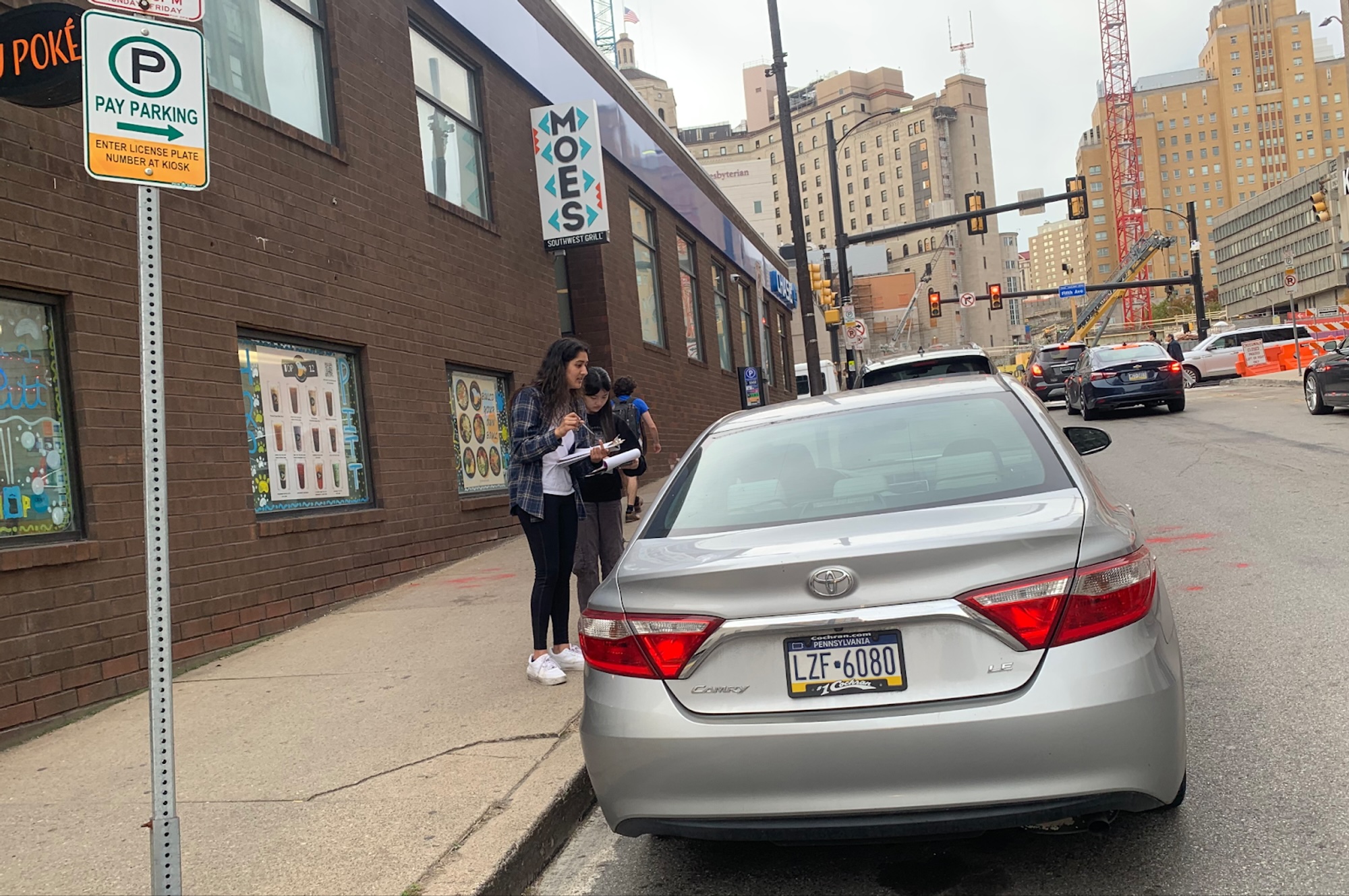
Pittsburgh's Smart Loading Zones (SLZ) were designed to improve parking efficiency and reduce delivery times. But adoption was stuck. Most drivers either didn't know about them or actively avoided them.
- Team: Research team + stakeholders
Problem
The Parking Authority had questions that surveys couldn't answer:
- Why were drivers ignoring this service despite its benefits?
- What were the actual barriers to adoption?
- What would actually change driver behavior?
Traditional research would ask drivers: "Would you use SLZ?" They'd say yes. But observed behavior told a different story entirely.
Outcome: From Research to Policy
The design research led to concrete changes in how Pittsburgh's SLZ operates:
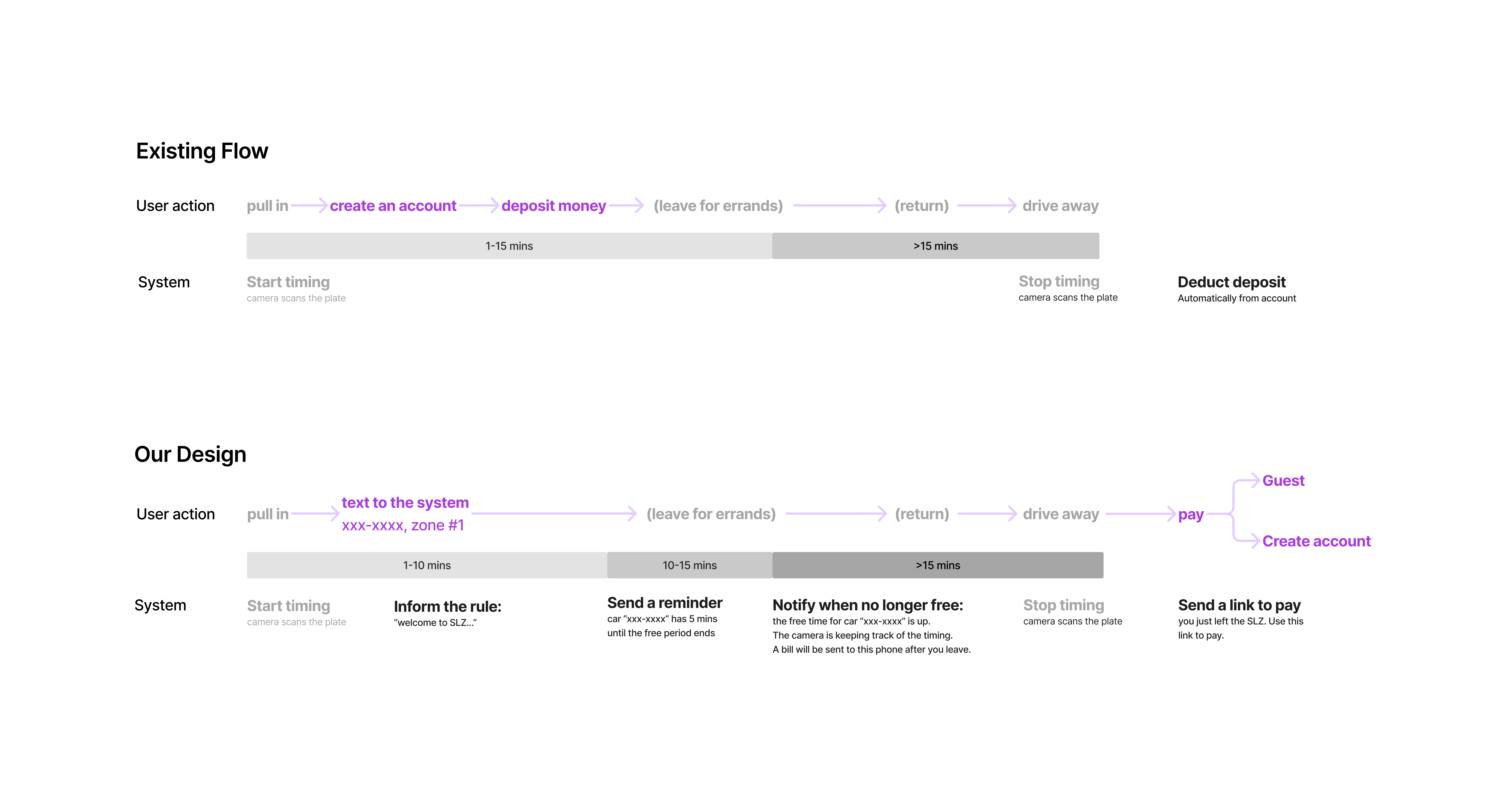
- Shifted from upfront payment to pay-after-exit — Removing the barrier to trial
- Text-based messaging system — The fastest way to reach drivers already on the go
- Redesigned signage — Clearer, color-coded, immediately understandable
My Role & Research Process
What Design Revealed
Survey answer: "Would you use Smart Loading Zones?" 78% said yes.
Design revealed: The actual barriers to adoption that surveys miss.
1. Awareness gap: 60%+ unaware
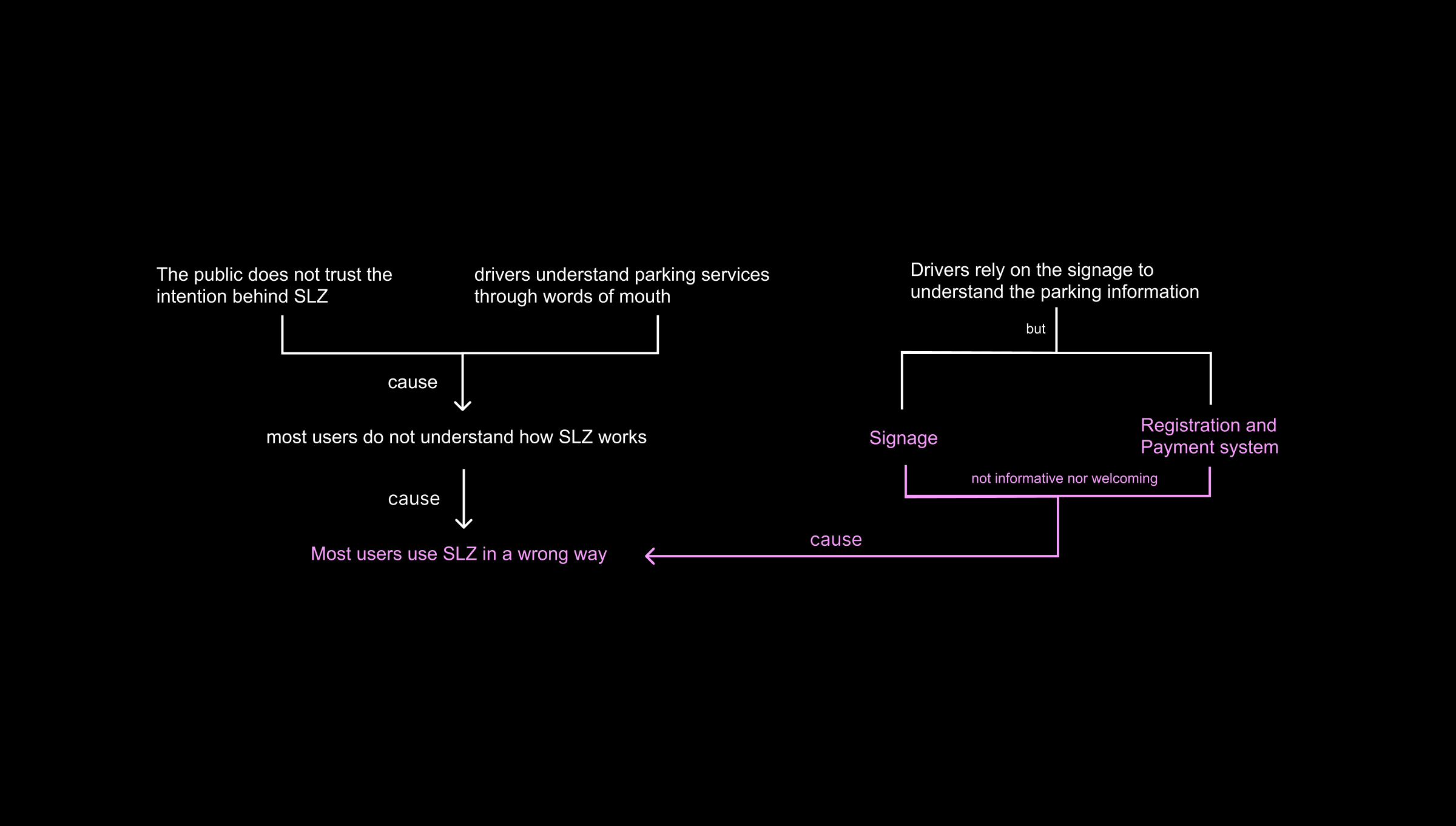
Drivers saw the purple curbs but didn't know what they meant. Signage clarity was the #1 issue.
Design implication: Information hierarchy and visibility became critical design requirements.
2. Confusion created workarounds: 95% used hazard lights
Drivers didn't understand the rules, so they defaulted to the universal signal: hazard lights. This meant they were avoiding the system, not using it.
Design implication: Rules must be immediately clear from the visual design alone.
3. Friction killed adoption: upfront commitment required
Drivers avoided unfamiliar services that required upfront registration or payment before they could test them.
Design implication: Service model must reduce activation friction—pay after, not before.
What surveys said drivers wanted ≠ what driver behavior actually required. Design prototypes bridged that gap.
Research Frameworks Used
Throughout the project, we built:
- Empathy maps — For each driver type (delivery, service, commuter)
- Journey models — Mapping the moment-by-moment decision making when approaching a loading zone
- Connection charts — Showing how pain points linked to actual adoption barriers
- Success metrics framework — Defining what "adoption" actually means behaviorally


Why Design Was Essential
Traditional research methods would have confirmed the obvious: drivers want efficient parking. But design as research revealed the non-obvious: drivers will default to hazard lights rather than learn a new system if the system seems confusing.
This insight only emerged by watching people interact with prototypes in real time. A survey could never uncover that. An analytics dashboard wouldn't show the frustration and hesitation in a driver's face. Only design—the act of making something tangible and testable—revealed what actually mattered.
Design is a research method because it forces clarity. When you prototype something, you can't hide behind vague language. "Users want ease of use" is meaningless. But a prototype forces you to specify: Which button? What color? How much text on the sign? That specificity is where insights emerge.
For the full project documentation, prototypes, and detailed research findings, visit the complete case study →